
Best Pool Coping Materials for South Florida: How to Choose the Right Pool Edge
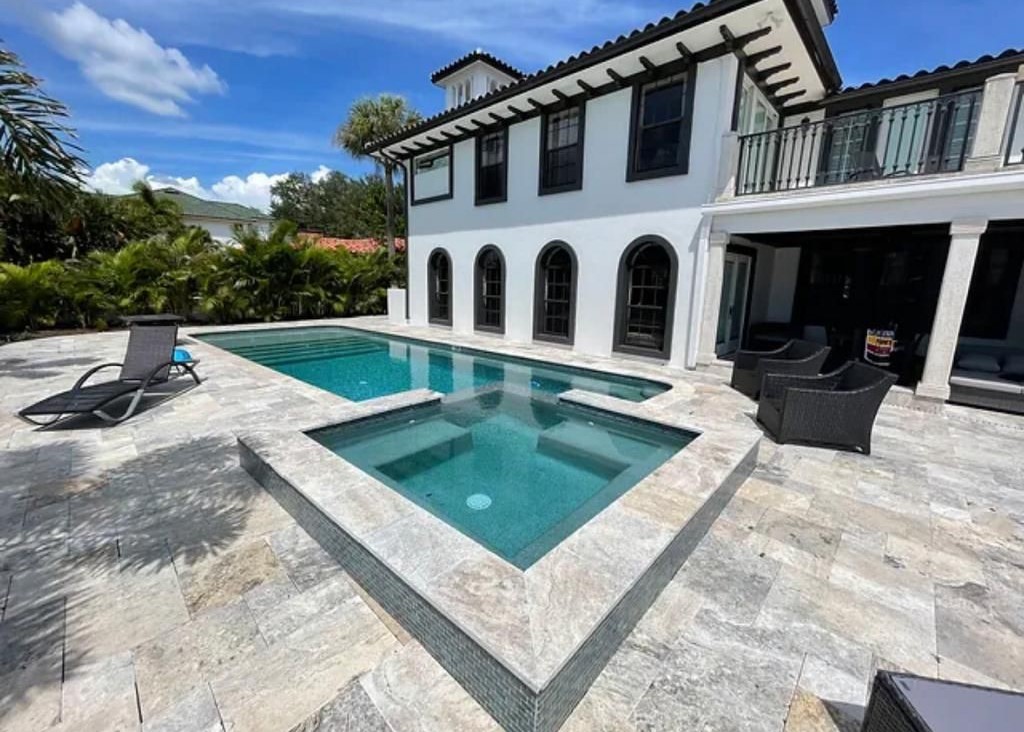
BEST POOL COPING MATERIALS
FOR SOUTH FLORIDA
Compare pool coping materials for South Florida, including travertine, marble, concrete, paver, porcelain, and other options by heat, traction, maintenance, appearance, and project fit.
Pool coping is the finished edge around the top perimeter of an in-ground pool. It is one of the first surfaces swimmers touch, one of the strongest visual lines in the pool area, and the transition point between the pool shell, waterline tile, and surrounding deck.
That makes coping more than a decorative border.
The selected material, surface finish, edge profile, dimensions, color, and installation details can affect comfort, appearance, maintenance, drainage transitions, and how successfully the pool coordinates with the surrounding outdoor space.
South Florida adds another layer to the decision. Coping is exposed to strong sun, frequent rain, year-round use, pool water, cleaning products, landscaping debris, and repeated wet-and-dry cycles. A material that looks good in a catalog still needs to suit the actual pool, deck, site conditions, and maintenance expectations.
The best choice is not automatically travertine, marble, concrete, porcelain, or any other category. It is the specific coping product that provides the right combination of:
- Appropriate wet-area surface characteristics
- Comfortable edge treatment
- Compatibility with the pool and deck
- Suitable dimensions and available shapes
- Realistic maintenance expectations
- A look the homeowner actually wants
- Proper installation for the existing conditions
This guide explains how the primary coping categories differ and what South Florida homeowners should compare before making a selection.
- 1. The Short Answer
- 2. What Pool Coping Is—and What It Is Not
- 3. Pool Coping Materials at a Glance
- 4. Concrete and Paver Coping
- 5. Travertine Pool Coping
- 6. Marble Pool Coping
- 7. Porcelain Pool Coping
- 8. Other Natural-Stone and Coping Options
- 9. Pool Coping Edge Profiles and Styles
- 10. How South Florida Conditions Affect Coping Selection
- 11. How to Coordinate Coping With Tile, Finish, and Decking
- 12. Should Existing Pool Coping Be Kept, Repaired, or Replaced?
- 13. What to Compare Before Choosing Pool Coping
- 14. Frequently Asked Questions
The Short Answer
The best pool coping for a South Florida property is the product that fits the pool’s geometry, exposure, design, surrounding deck, maintenance plan, and project scope.
A practical starting point is:
- Concrete or manufactured paver coping may suit homeowners who want coordinated colors, repeatable dimensions, and compatibility with a paver pool deck.
- Travertine coping may provide a natural, warm appearance with visible variation from piece to piece.
- Marble coping may create a more refined natural-stone appearance, with performance and maintenance considerations that depend on the exact stone and finish.
- Porcelain coping may provide a consistent, contemporary look when the selected product is manufactured and approved for the intended exterior wet-area application.
- Other natural-stone or specialty options may work when their surface, fabrication, thickness, edge treatment, and installation requirements fit the project.
Material category alone is not enough. Two products sold under the same general label can differ in color, texture, finish, thickness, edge profile, absorption, maintenance needs, and suitability for a particular installation.
Ask to review the exact manufacturer, collection, color, finish, size, thickness, edge profile, corner pieces, and product documentation—not just a generic sample labeled “travertine,” “marble,” or “porcelain.”
Homeowners deciding whether coping belongs in a focused surface project or a larger renovation can begin with the difference between pool resurfacing and broader pool remodeling.
What Pool Coping Is—and What It Is Not
Pool coping is the material that caps the upper edge of the pool structure. It creates the visible and touchable transition between the waterline area and the surrounding deck.
Depending on the pool and selected design, coping may help:
- Finish and protect the pool perimeter
- Create a comfortable edge for hands and feet
- Provide a visual border around the water
- Coordinate the pool with the surrounding deck
- Manage the transition between different materials
- Direct water as part of the overall drainage design
- Accommodate straight runs, curves, corners, steps, spas, and raised features
The Pool & Hot Tub Alliance’s remodeling guidance includes coping among the components homeowners may update during a renovation.
Coping is not the same as waterline tile. Waterline tile is installed vertically near the water surface, while coping forms the upper perimeter edge.
Coping is also not the entire pool deck. The deck is the larger walking and activity surface surrounding the pool. The two materials may match, coordinate, contrast, or use different products from the same collection.
Finally, coping material and coping profile are different decisions. Travertine, marble, concrete, and porcelain describe material categories. Bullnose, eased, square, drop-face, and other terms describe how the visible edge is shaped or presented.
A good proposal should identify both the material and the edge treatment.
Pool Coping Materials at a Glance
Use this table as a planning comparison—not as a universal ranking. Final performance depends on the exact product, surface finish, fabrication, installation, exposure, maintenance, and site conditions.
| Coping category | General appearance | Surface and edge considerations | Heat and sun considerations | Maintenance considerations | Coordination opportunities | Important tradeoffs |
|---|---|---|---|---|---|---|
| Concrete or manufactured paver coping | Consistent, versatile, and available in many colors and styles | Available in formed or manufactured pieces with product-specific textures and edge profiles | Color, density, finish, and sun exposure affect surface temperature; compare actual samples | Cleaning, joint care, sealing where recommended, and replacement-piece availability vary by product | Often coordinates easily with concrete-paver pool decks, patios, steps, and walls | Manufactured appearance may be more consistent but less naturally varied; availability of matching shapes should be confirmed |
| Travertine coping | Warm natural-stone appearance with variation in tone, movement, pores, and markings | Surface finish, filled or unfilled areas, edge treatment, thickness, and fabrication require review | Light-colored options are often considered for sunny pool areas, but no product should be assumed comfortable in every condition | May require product-appropriate cleaning, joint care, and sealing decisions; natural voids and variation should be understood | Can coordinate with travertine decks, contrasting pavers, waterline tile, and warm or neutral pool finishes | Natural variation may be desirable or unexpected; exact finish and product quality matter |
| Marble coping | Refined natural-stone appearance with veining, movement, and color variation | Finish should be evaluated for wet-area use, comfort, edge fabrication, and visual consistency | Color and finish influence solar heat; compare the exact stone outdoors when possible | Cleaning methods, sealing recommendations, chemical exposure, and natural variation depend on the stone | Can create a coordinated high-end look with marble decking, contrasting tile, and modern or classic pools | Some selections show strong variation or surface changes; suitability cannot be judged from the word “marble” alone |
| Porcelain coping | Controlled, contemporary appearance with manufactured colors and patterns | Confirm exterior wet-area suitability, coping-piece fabrication, edge treatment, thickness, and corner availability | Color and surface finish influence comfort in direct sun; inspect real samples | Often selected for consistency and product-specific maintenance characteristics; follow manufacturer instructions | May coordinate with matching porcelain pavers and modern architectural palettes | Product availability, fabrication, installation system, edge pieces, and replacement supply require confirmation |
| Other natural-stone or specialty options | Ranges from rustic and textured to minimal and architectural | Evaluate the exact stone or product for wet exposure, surface finish, edge fabrication, and dimensions | Do not infer heat performance from the category name | Maintenance varies widely by material and finish | May support distinctive designs or match existing architecture and hardscape | Local availability, fabrication, suitability, variation, and replacement pieces may be less predictable |
Concrete and Paver Coping
Concrete coping can refer to several different approaches, including precast coping pieces, manufactured concrete-paver coping, or a formed and poured edge.
Those are not interchangeable products.
Manufactured concrete coping is often selected because it can coordinate with a concrete-paver deck. Depending on the manufacturer and collection, homeowners may be able to match or complement the coping with the surrounding pavers, steps, walls, and patio areas.
Potential advantages include:
- Repeatable dimensions
- Coordinated product collections
- Multiple colors and textures
- Availability of straight or curved applications
- Replacement of individual pieces when compatible material remains available
- Familiar visual coordination with paver pool decks
The edge profile still matters. A rounded edge may feel different from a sharper modern profile. Belgard’s Bullnose Coping and Marina Coping illustrate how manufactured coping products may use rounded edges and coordinate with adjacent hardscape.
Those examples do not mean every concrete coping product has the same characteristics. Confirm:
- Exact product and color
- Surface texture
- Edge profile
- Piece dimensions
- Corner and radius solutions
- Installation method
- Joint treatment
- Manufacturer recommendations
- Whether matching replacement pieces are likely to remain obtainable
A concrete or paver coping selection should also be compared directly with the surrounding deck. Our guide to the best pool-deck materials for South Florida explains the broader deck decision.
Travertine Pool Coping
Travertine is a natural stone known for warm colors, visible pores, mineral movement, and variation between pieces.
That variation is part of the material. One sample cannot represent every piece that may appear in a finished installation.
When evaluating travertine coping, compare:
- Color range
- Vein-cut or cross-cut appearance where applicable
- Surface finish
- Filled or unfilled voids
- Edge profile
- Thickness
- Piece length and width
- Corner fabrication
- Curved-pool requirements
- Recommended cleaning and maintenance
- Whether sealing is recommended for the exact product and application
Homeowners sometimes hear that travertine is always cool or always slip-resistant. Those statements are too broad. Surface temperature and wet-area behavior can be affected by color, finish, density, exposure, moisture, maintenance, contaminants, and site conditions.
Travertine may be a strong candidate for a sunny South Florida pool area, but the decision should be made from the actual product—not the category name alone.
It should also be viewed beside the selected waterline tile, interior finish, and deck material. A warm beige coping can interact very differently with blue glass tile than with neutral ceramic tile, gray marble decking, or a pale pool finish.
Homeowners can review existing travertine-paver options and compare physical materials through the Precision Pool Products showroom.
Marble Pool Coping
Marble coping is often selected for its color movement, veining, refined appearance, and ability to create a coordinated natural-stone pool deck.
But “marble” is still a broad category.
The exact stone, quarry source, finish, thickness, fabrication, color range, veining, and installation conditions matter. One marble selection may look relatively uniform, while another may show dramatic movement from piece to piece.
Review:
- The approved color range
- Expected veining and variation
- Surface finish
- Edge fabrication
- Thickness and piece dimensions
- Wet-area suitability
- Cleaning requirements
- Manufacturer or supplier sealing guidance
- Exposure to pool water and cleaning products
- Availability of matching deck pavers
- Availability of replacement pieces
Avoid choosing marble from a heavily edited photograph. View multiple physical pieces whenever possible, preferably in natural light.
Also avoid assuming a polished-looking sample represents the finish intended for a wet pool perimeter. The selected finish needs to be appropriate for the actual application.
Marble coping may coordinate with a matching marble deck, but an exact match is not mandatory. It can also work as a defined border against contrasting pavers or another compatible deck material.
Explore Precision’s marble-paver options, then verify the exact coping product and finish being proposed.
Porcelain Pool Coping
Porcelain can offer controlled color, repeatable patterning, and a contemporary appearance. Some collections include coordinating field pavers and coping pieces, while others require separate fabrication or edge solutions.
That distinction matters.
A standard porcelain paver should not automatically be assumed to function as finished pool coping. Confirm that the proposed system addresses:
- Exterior use
- Wet-area suitability
- Coping-piece design or fabrication
- Exposed-edge treatment
- Thickness
- Installation method
- Corner pieces
- Curved sections
- Steps and raised spas
- Color and pattern variation
- Replacement availability
- Manufacturer requirements
Porcelain can appeal to homeowners who want a minimal, architectural, or highly coordinated look. It may also provide more controlled visual consistency than natural stone.
However, consistency in appearance does not eliminate the need to review texture, direct-sun exposure, edge comfort, joints, drainage transitions, and installation requirements.
Precision does not currently have a dedicated porcelain route on the main site, so do not create one. Homeowners interested in porcelain should compare verified physical products and availability through the Precision Pool Products showroom.
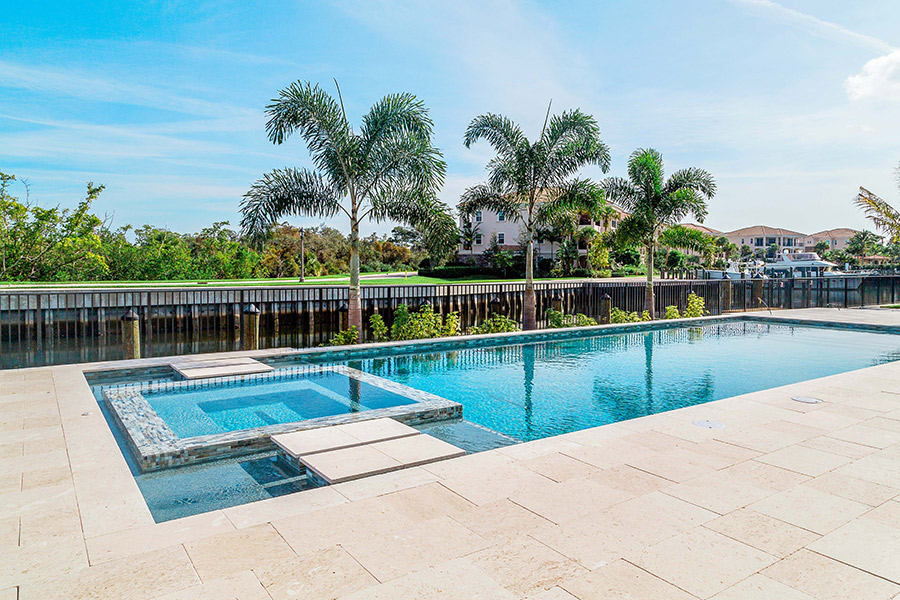
Other Natural-Stone and Coping Options
Other coping possibilities may include limestone, sandstone, granite, coral-style stone, specialty concrete products, tile-based systems, or another product appropriate to the pool and design.
These categories vary too widely for a single universal recommendation.
For any less familiar material, ask:
- Is it intended for exterior wet-area use?
- What surface finish is proposed?
- How will the exposed edge be finished?
- Are straight, corner, radius, and specialty pieces available?
- How much color or texture variation should be expected?
- How does the material react to the planned cleaning and maintenance routine?
- Does the supplier recommend sealing?
- Can individual pieces be replaced later?
- Is the installation method appropriate for the existing pool and deck?
- Can the material be viewed in person?
The Natural Stone Institute resource library includes technical resources covering stone categories, exterior applications, wet areas, paving, coping, maintenance, and installation considerations.
Use technical information for the exact material being considered. Do not transfer the characteristics of one stone to another simply because both are natural.
Pool Coping Edge Profiles and Styles
The edge profile affects comfort, shadow lines, water-side appearance, and the overall architectural style of the pool.
Common descriptions include:
Bullnose
A bullnose profile has a visibly rounded edge. The amount of rounding varies by product. It is often selected for a softer, more traditional transition at the pool perimeter.
Eased or softened edge
An eased edge is generally more squared than a full bullnose but softens the sharp corner. The exact radius and finish should be shown in the product or fabrication details.
Square or contemporary edge
A straighter edge can support a modern look. “Square” should not be interpreted as an unfinished or uncomfortably sharp exposed edge. Confirm how the visible edge will be fabricated and finished.
Drop-face coping
Drop-face coping extends downward over the visible pool edge, creating a deeper fascia. It may be used to form a stronger architectural line or conceal part of the underlying edge condition.
Cantilever or formed edge
A cantilevered deck edge may extend over the pool perimeter and visually reduce the separation between the coping and deck. Its construction and repair implications differ from individually installed coping pieces.
Not every profile is available in every material, size, color, or product line. Curved pools, tight radiuses, raised spas, steps, and water features may require specialty pieces or fabrication.
Do not select an edge profile from a close-up photograph alone. View how it meets:
- The waterline tile
- The pool interior
- The deck
- Corners
- Curves
- Steps
- Spa transitions
- Raised walls and water features
How South Florida Conditions Affect Coping Selection
South Florida coping is exposed to conditions that should be discussed before the material is ordered.
Direct sun and heat
Dark colors and certain dense surfaces may become uncomfortable in strong sun. Light colors are often considered for exposed pool areas, but no material should be given a universal temperature promise.
Compare actual samples outdoors when practical, and consider which sections of the pool receive the most afternoon sun.
Frequent rain and wet use
The coping will regularly become wet from swimmers, rain, cleaning, and normal pool activity. Surface texture, slope, drainage, cleaning, and contamination all influence how the area performs.
A generic material name does not establish slip resistance.
Drainage and transitions
The pool edge, deck elevations, joints, and surrounding drainage must work together. The publicly available draft of the PHTA-5 residential inground-pool standard addresses directing deck drainage away from the pool or toward an approved drainage system.
That does not replace project-specific code review or professional design. It demonstrates why coping selection cannot be separated from deck elevations and drainage planning.
Salt and chemical exposure
A salt-chlorine system does not make the pool water identical to seawater, but coping still experiences water, dissolved salts, sanitizers, balancing chemicals, and cleaning products.
Ask the product supplier and installer about the exact material, finish, joint system, cleaning procedure, and sealing guidance.
Natural variation and weathering
Stone can vary in color, movement, pores, veining, texture, and edge appearance. Manufactured products may also show intentional tonal variation.
Review the acceptable range before installation and understand that outdoor materials can change in appearance with use, weather, cleaning, and time.
Year-round use
Because many South Florida pools are used throughout the year, comfort, maintenance, repair access, and visual coordination may matter as much as the initial showroom appearance.
How to Coordinate Coping With Tile, Finish, and Decking
Coping sits at the meeting point of three major visual surfaces:
- The interior pool finish
- The waterline tile
- The surrounding pool deck
Those surfaces should be selected together, even when they are not replaced together.
Coordinate with the interior finish
The interior finish affects perceived water color. Coping is viewed immediately beside that water, so its undertone can either coordinate or create an unintended contrast.
Use the South Florida pool-finish comparison to understand how finish category, color, water depth, and light influence the pool’s appearance.
Coordinate with waterline tile
Waterline tile creates the visual band between the water and coping. Compare the coping sample directly with the selected tile rather than approving them in separate rooms or under different lighting.
Precision’s glass tile and mosaic options can help homeowners consider color, scale, and finish relationships.
Coordinate with the pool deck
The coping may match the deck, use a related tone, or create an intentional border.
If the same material is used for both, confirm that the coping pieces and field pavers belong to a coordinated system or are visually compatible.
If different materials are used, compare:
- Undertones
- Surface texture
- Thickness
- Joint width
- Pattern scale
- Elevation transition
- Edge treatment
- Expected variation
- Maintenance requirements
Homeowners planning multiple components can use the South Florida pool-remodeling guide to define the broader scope.
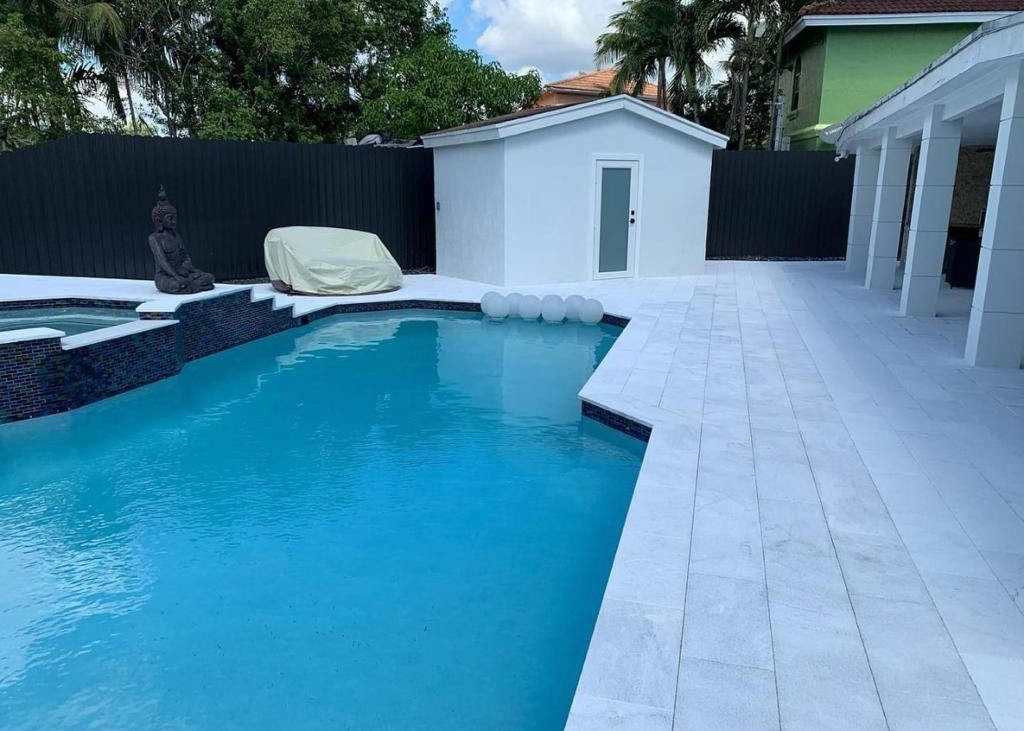
Should Existing Pool Coping Be Kept, Repaired, or Replaced?
Coping does not need to be replaced merely because a pool is being resurfaced.
Existing coping may remain when it is suitable for the project, works with the planned finish and tile, and does not interfere with the necessary construction sequence.
Replacement may deserve consideration when coping is:
- Loose
- Broken or significantly chipped
- Separating from adjoining materials
- Uneven or creating an uncomfortable transition
- Incompatible with the planned design
- Affected by work at the tile line or pool edge
- Part of a broader deck replacement
- Difficult to preserve without compromising the approved scope
Visible cracking, separation, or movement does not diagnose its own cause. The condition may involve an individual piece, joints, installation, deck movement, the pool edge, or another underlying issue.
When the cause is uncertain, evaluate it before selecting a cosmetic solution.
Repair can sometimes be practical when the affected area is limited and compatible replacement material is available. It can become difficult when the original material is discontinued, weathered, highly variable, or fabricated in a size or color that no longer matches.
The guide to replacing pool tile, coping, and decking during resurfacing provides a more complete keep-repair-replace framework.
If coping or related work is included with resurfacing, the pool-resurfacing process guide explains why connected work should be identified and sequenced before the new interior finish is installed.
What to Compare Before Choosing Pool Coping
Do not approve coping based only on a product name and a single photograph.
Use the following checklist when comparing samples, proposals, and project scopes.
| Planning factor | What to confirm |
|---|---|
| Exact manufacturer and product | Record the manufacturer, collection, product name, and identifying information rather than relying on a generic material label |
| Material category | Confirm whether the product is natural stone, manufactured concrete, porcelain, poured concrete, or another system |
| Color and natural variation | Review the expected range across multiple pieces, including veining, pores, movement, and tonal variation |
| Surface texture | Evaluate how the proposed finish feels and whether it is intended for the exterior wet-area application |
| Edge profile | Identify the exact bullnose, eased, square, drop-face, cantilever, or other exposed-edge treatment |
| Piece size and thickness | Confirm actual dimensions and whether they suit the existing pool edge and deck transition |
| Straight and curved-piece availability | Determine how straight runs, radiuses, corners, steps, spas, and specialty areas will be handled |
| Wet-area suitability | Review manufacturer, supplier, and installer information for the proposed use |
| Heat and direct-sun exposure | Compare the exact color and surface under realistic outdoor conditions when practical |
| Salt or chemical exposure | Ask how the product, joints, sealers, and cleaning procedures relate to the pool environment |
| Cleaning and maintenance expectations | Identify approved cleaning methods and prohibited products |
| Sealing expectations where applicable | Confirm whether sealing is recommended, what product is appropriate, and who is responsible |
| Compatibility with waterline tile | View samples together and confirm how the materials meet |
| Compatibility with the interior finish | Compare undertones and anticipated water appearance |
| Compatibility with the pool deck | Confirm color, texture, thickness, joints, pattern, and elevation transitions |
| Drainage and elevation transitions | Determine how the coping and deck work together to manage water and provide a usable transition |
| Replacement-piece availability | Ask whether extra pieces should be retained and how future matching may be affected by product variation or discontinuation |
| Installation scope | Identify preparation, removal, installation, joints, fabrication, cleanup, protection, and sequencing |
| Exclusions and related repairs | Clarify what happens if deterioration, movement, tile damage, or another condition is discovered |
A clear proposal should identify the selected product and the work being performed. “Install new stone coping” is not enough detail for a meaningful comparison.
Frequently Asked Questions
Q:What is the best pool coping material for South Florida?
There is no single material that is best for every South Florida pool. The right choice depends on the exact product, surface finish, edge profile, sun exposure, wet-area use, pool geometry, surrounding deck, maintenance expectations, design goals, and installation conditions.
Q:Is travertine or marble better for pool coping?
Neither category is automatically better. Travertine and marble differ by specific stone, color, finish, density, variation, fabrication, maintenance guidance, and supplier. Compare the exact products in person and evaluate how each works with the tile, finish, deck, and property conditions.
Q:Does pool coping have to match the pool deck?
No. Coping may match the deck, coordinate with a related color, or create an intentional contrast. The important issues are visual compatibility, material transitions, dimensions, joints, elevations, maintenance, and installation details.
Q:What is the difference between pool coping and waterline tile?
Coping caps the upper perimeter edge of the pool. Waterline tile is installed vertically near the water surface below the coping. They meet visually and physically, but they are different components with different roles.
Q:Is bullnose coping safer than square-edge coping?
A rounded bullnose may provide a softer edge for hands and feet, but safety cannot be determined from the profile name alone. Surface texture, fabrication, installation, wet conditions, maintenance, elevation changes, and the exact product also matter.
Q:Does pool coping need to be replaced during resurfacing?
Not automatically. Existing coping may remain when it is sound, compatible with the new finish and tile, and suitable for the project sequence. Loose, damaged, moving, incompatible, or poorly coordinated coping may justify repair, replacement, or further evaluation.
Q:Should pool coping be sealed?
Sealing depends on the exact material, surface finish, exposure, manufacturer or supplier guidance, and selected sealer. Do not assume every coping product requires the same treatment. Confirm the recommendation for the specific installed product.
Q:Can I choose pool coping from photographs online?
Photographs are useful for inspiration, but they do not reliably show texture, heat, edge comfort, thickness, natural variation, or true color. Review physical samples and the exact product information before approving the final selection.
Planning New Pool Coping or a Coordinated Pool Remodel?
The right coping decision starts with the existing pool edge, the materials that will remain, and the surfaces being updated. Precision Pavers & Pool Design can help you evaluate the coping, compare material and edge-profile options, and coordinate the selection with the waterline tile, interior finish, and surrounding pool deck.
Visit the Precision Pool Products showroom to compare available material categories and colors in person, or discuss the complete remodeling scope with the Precision team.