
Pool Resurfacing vs. Pool Remodeling: Which Does Your Pool Need?
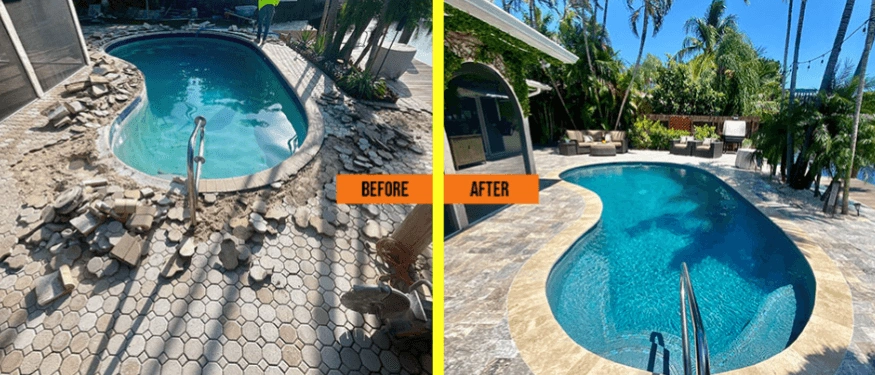
POOL RESURFACING
VS. POOL REMODELING
Resurfacing renews the interior finish. Remodeling can address the finish plus tile, coping, decking, features, and broader design or functional goals. Here’s how to evaluate the right scope.
If your pool looks worn or outdated, the first question is not necessarily which finish or tile to choose. It is whether the project should focus on the interior surface or address several parts of the pool and surrounding area together.
Pool resurfacing primarily renews the pool’s interior finish. Pool remodeling is a broader project that may include resurfacing along with new waterline tile, coping, decking, pavers, features, or other design and functional changes. Resurfacing may be enough when the finish is the main concern. Remodeling may make more sense when multiple components need attention or the goal extends beyond the pool surface.
There is also a third possibility: the cause of a problem needs to be evaluated before either scope is chosen. Water loss, recurring cracks, movement, or unexplained surface failure should not automatically be treated as a resurfacing issue.
- 1. What Is Pool Resurfacing?
- 2. What Is Pool Remodeling?
- 3. Pool Resurfacing vs. Remodeling at a Glance
- 4. The Finish–Components–Function Check
- 5. When Resurfacing May Be Enough
- 6. When a Broader Pool Remodel May Make More Sense
- 7. Problems That Should Be Evaluated Before Choosing Either Option
- 8. Should Tile, Coping, and Decking Be Updated at the Same Time?
- 9. How to Prepare for a Pool Assessment
- 10. Choosing the Right Scope for a South Florida Pool
- 11. Frequently Asked Questions
What Is Pool Resurfacing?
Pool resurfacing is work centered on renewing or replacing the interior finish of a swimming pool after the existing surface has been properly evaluated and prepared.
The interior finish is the material you see and feel across the pool floor and walls. Depending on the pool and selected system, it may be plaster-based, quartz aggregate, pebble aggregate, or another appropriate finish. The South Florida pool-finish comparison explains how plaster, quartz, pebble, and other finish categories differ in appearance, texture, expectations, and selection considerations.
Resurfacing may be considered when the interior has become:
- Rough or uncomfortable underfoot
- Faded or discolored
- Stained or etched
- Worn or deteriorated
- Visibly aged even though the rest of the pool still meets the owner’s needs
The exact preparation required is not identical for every pool. It depends on the existing material, its condition, the substrate, and the new finish system being installed.
The National Plasterers Council notes that cementitious pool finishes are affected by the materials, application, startup, ongoing care, and water chemistry. That is one reason a surface should be evaluated instead of assuming every stain, rough area, or crack has the same cause.
Resurfacing also has limits. It does not automatically correct a plumbing leak, structural movement, a settling pool deck, failed coping, drainage problems, or a design that no longer works for the property. Learn more about our specialized pool resurfacing options.
What Is Pool Remodeling?
Pool remodeling is a broader category. It can include resurfacing, but it may also involve other parts of the pool or outdoor environment.
Depending on the property and project goals, a remodel might include:
- A new interior finish
- New waterline tile
- New or redesigned pool coping
- Pool-deck or paver replacement (such as brick pavers or travertine pavers)
- Updated water or fire features
- Changes intended to create a more coordinated outdoor-living space
Not every remodel includes all of these components. A project might combine resurfacing and tile replacement, while another may involve the finish, coping, pool deck, and surrounding patio.
The important point is that remodeling describes a wider project scope, while resurfacing focuses primarily on the pool interior.
You may also hear the word renovation. Contractors and homeowners often use renovation and remodeling interchangeably. Rather than relying on the label alone, review the written scope carefully. It should identify which surfaces, components, repairs, and upgrades are actually included.
The Pool & Hot Tub Alliance similarly treats repairs, resurfacing, and full renovation as different levels of work that should be matched to the pool’s condition and the owner’s goals. Explore Precision’s complete pool remodeling services.
Pool Resurfacing vs. Remodeling at a Glance
| Decision point | Pool resurfacing | Pool remodeling |
|---|---|---|
| Primary purpose | Renew the interior pool finish | Update multiple pool or outdoor components |
| Typical scope | Surface evaluation, preparation, and new interior finish | May include resurfacing, tile, coping, decking, pavers, features, and broader design changes |
| Best fit | The interior finish is the main concern and other components remain suitable | Several components need attention or the owner wants a broader transformation |
| Design flexibility | Changes the interior finish, color, and texture within available options | Can coordinate the finish with tile, coping, deck materials, and surrounding outdoor areas |
| Planning needs | Focused evaluation of the existing surface and selected finish system | Coordination among multiple materials, interfaces, project phases, and goals |
| Important caution | A new finish will not automatically solve an undiagnosed leak, movement, or structural problem | A larger scope still requires the cause of existing problems to be understood |
The Finish–Components–Function Check
A useful way to think about the decision is to look at three things: the finish, the surrounding components, and how the pool functions.
1. Finish
Is the main concern limited to the interior surface?
If the finish is worn, rough, stained, faded, or deteriorated while the rest of the pool remains in good condition and still fits your needs, resurfacing may be the appropriate focus. If you are still evaluating what the pool is telling you, review the signs that a pool may need resurfacing before deciding on the project scope.
2. Components
Do the waterline tile, coping, pool deck, pavers, or surrounding features also need attention?
When several visible components are worn, damaged, dated, or being redesigned, reviewing them as one remodeling project may create a cleaner plan and reduce conflicts between materials or construction phases. See options for pool deck remodeling and glass tile mosaics.
3. Function
Are there concerns involving water loss, movement, circulation, layout, usability, or recurring failure?
Those symptoms may need professional evaluation before anyone decides that resurfacing or cosmetic remodeling is the answer.
The Finish–Components–Function Check is a planning tool, not a diagnostic test:
Finish–Components–Function Check
FINISH
Interior surface is the main concern
COMPONENTS
Tile, coping, deck, pavers, or design also need attention
FUNCTION
Water loss, movement, recurring cracks, or an unknown cause
- Finish is the main issue: Resurfacing may be sufficient.
- Finish plus several components or design goals: A broader remodel may make more sense.
- Unexplained functional or structural symptoms: Evaluate the cause before selecting either scope.
When Resurfacing May Be Enough
Resurfacing may be the more focused choice when all or most of the following are true:
- The interior finish is the primary concern.
- The waterline tile and coping remain sound and still fit the design.
- The pool deck or surrounding pavers are staying in place.
- The pool’s layout and features still meet your needs.
- There are no unexplained symptoms that must be addressed first.
- You want to renew the pool interior rather than redesign the entire environment.
Even in a resurfacing-focused project, it makes sense to look at how the new finish will coordinate with the existing tile, coping, and deck. A finish can change the perceived water color and overall appearance of the pool, so it should not be selected in a vacuum.
When a Broader Pool Remodel May Make More Sense
A remodel may be the better planning category when the project extends beyond the pool’s interior surface. For a component-by-component planning framework, use the South Florida pool-remodeling guide to evaluate the interior finish, tile, coping, deck, features, and related work together.
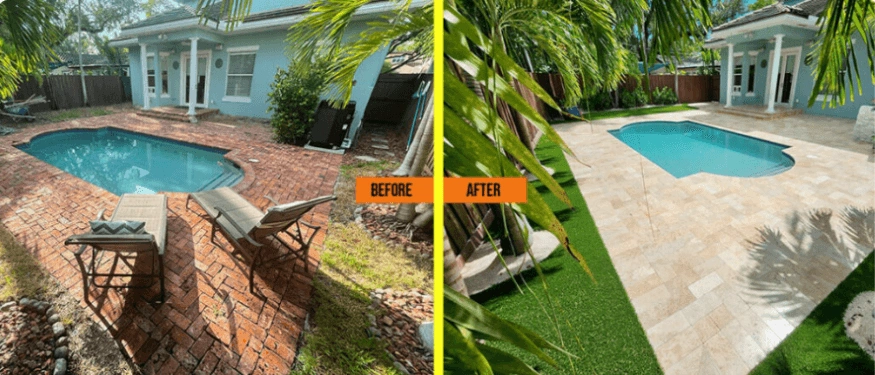
Common situations include:
- The finish, waterline tile, and coping all need attention.
- The pool deck or pavers are also being replaced or redesigned (such as adding marble pavers or patio pavers).
- The existing materials no longer coordinate visually.
- The owner wants to introduce verified features or create a different overall look.
- The pool area no longer works well with the way the outdoor space is used.
- Completing one component now would make another necessary project more disruptive later.
For example, replacing the interior finish without considering loose waterline tile or coping separation could leave an unfinished-looking result and create additional work later. On the other hand, sound tile and coping do not need to be replaced simply because the pool is being resurfaced.
The goal is not to make the project larger than necessary. It is to choose a scope that accounts for the condition of the connected components and the owner’s actual goals.
Problems That Should Be Evaluated Before Choosing Either Option
Some symptoms do not point neatly to resurfacing or remodeling. They point to the need for a closer evaluation.
Examples include:
- Unexplained or recurring water loss
- Significant, widening, or recurring cracks
- Movement or separation around the coping or pool deck
- Hollow, loose, or delaminated surface areas
- Plumbing or circulation concerns
- Staining or finish deterioration that keeps returning
- Problems affecting both the pool and surrounding hardscape
Visible symptoms can have more than one cause. A crack may be limited to a finish layer, or it may relate to movement elsewhere. Water loss could involve the pool surface, plumbing, fittings, equipment, or another condition entirely.
That distinction cannot be made responsibly from a generic checklist or a photograph alone. The underlying issue should be evaluated before a new finish or broader remodeling plan is finalized.
Should Tile, Coping, and Decking Be Updated at the Same Time?
Not automatically.
The better question is whether those components are sound, whether they work with the planned finish, and whether leaving them in place will complicate the project or limit the final result.
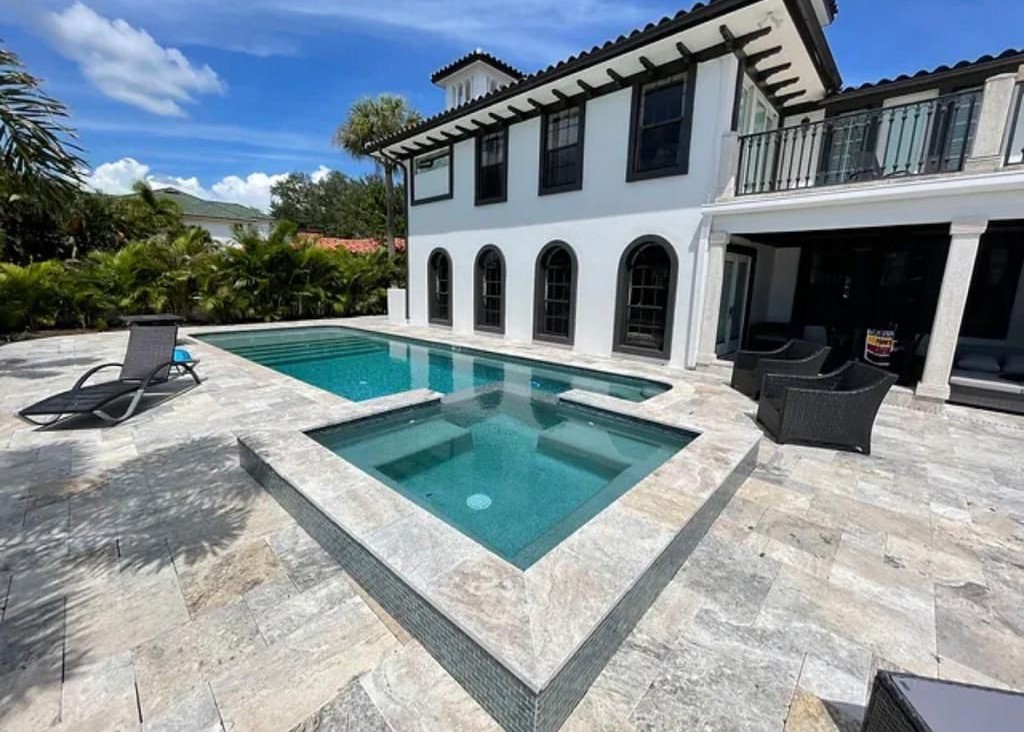
Reviewing the components together can help answer practical questions:
- Will the new interior finish coordinate with the existing waterline tile?
- Is the coping secure and suitable to remain?
- Will deck or paver work affect the coping or pool edge?
- Are drainage, settlement, or elevation issues visible around the pool area?
- Would completing the work in separate phases create avoidable disruption?
Sometimes the most sensible scope is resurfacing alone. Sometimes coordinating the finish, tile, coping, and pool deck creates a more complete and efficient plan. The condition of the property should drive the decision. Our guide to replacing pool tile, coping, and decking during resurfacing explains when combining the work may improve sequencing and when a component may reasonably remain. Explore our full range of outdoor enhancements.
How to Prepare for a Pool Assessment
You do not need to know the technical solution before speaking with a pool professional. You do need to be clear about what you are seeing and what you want to change.
Before the assessment:
- List the visible concerns. Note rough areas, staining, cracking, loose tile, coping separation, uneven decking, or other changes.
- Track recurring symptoms. Mention water loss, repeat staining, movement, or problems that return after maintenance.
- Define the goal. Are you trying to restore the pool, modernize its appearance, improve how the area functions, or redesign the full outdoor space?
- Identify what you want to keep. Existing tile, coping, pavers, and features may still work well.
- Gather inspiration carefully. Photos can clarify style preferences, but not every finish or feature will suit every pool, site, or budget.
- Ask for a separated scope. The proposal should make it clear which work applies to the interior surface, tile, coping, deck, repairs, and optional upgrades.
This makes it easier to compare recommendations and prevents the project label from hiding what is actually included.
Choosing the Right Scope for a South Florida Pool
South Florida pools and outdoor spaces are exposed to strong sun, frequent rain, year-round use, water chemistry, and regular contact with chlorine or salt systems. Those conditions make material selection and long-term coordination important, but they do not make every worn pool a full-remodel candidate.
Start with the problem you need to solve.
If the interior finish is the clear issue and the rest of the pool still works well, a focused resurfacing project may be enough. If the finish is only one part of a dated or failing pool environment, a broader remodel may create a better plan. If the pool is losing water, moving, cracking repeatedly, or showing unexplained damage, investigate the cause first.
That approach keeps the scope grounded in the pool’s actual condition instead of choosing the largest or smallest project by default. Once the scope is defined, homeowners can review South Florida pool-resurfacing costs and the pool-resurfacing process to understand the next planning decisions. Learn more about our services in Broward County, Fort Lauderdale, and surrounding South Florida communities.
Frequently Asked Questions
Q:Is pool resurfacing considered remodeling?
Pool resurfacing can be one component of a remodel. A resurfacing-only project is narrower because it focuses primarily on renewing the interior finish, while remodeling may include other pool and outdoor components.
Q:Can you remodel a pool without resurfacing it?
Potentially. If the planned work affects tile, coping, decking, pavers, or other components and the existing interior finish is still serviceable, resurfacing may not be necessary. The components and construction sequence should be evaluated together.
Q:Will resurfacing fix a leaking pool?
Not necessarily. Water loss can have several causes, including conditions unrelated to the interior finish. The source should be evaluated before assuming resurfacing will correct it.
Q:Should pool tile and coping be replaced during resurfacing?
Not automatically. Their condition, compatibility with the new finish, design goals, and the way the components meet should determine whether coordinated replacement makes sense.
Q:What is the difference between pool renovation and pool remodeling?
Contractors and homeowners often use renovation and remodeling interchangeably. The written scope matters more than the label. It should specify which surfaces, components, repairs, and upgrades are included.
Q:How can I tell whether pool cracks are cosmetic or structural?
A generic checklist cannot reliably determine the cause. Cracks, movement, or water loss should be professionally evaluated before the project scope is selected.
Not Sure Whether Your Pool Needs Resurfacing or a Broader Remodel?
Precision Pavers & Pool Design can evaluate the condition of your pool and discuss whether the project should focus on the interior finish or include tile, coping, decking, pavers, and other outdoor upgrades. Request an estimate to talk through the scope that fits your pool, property, and goals.