
How Much Does Pool Resurfacing Cost in South Florida?
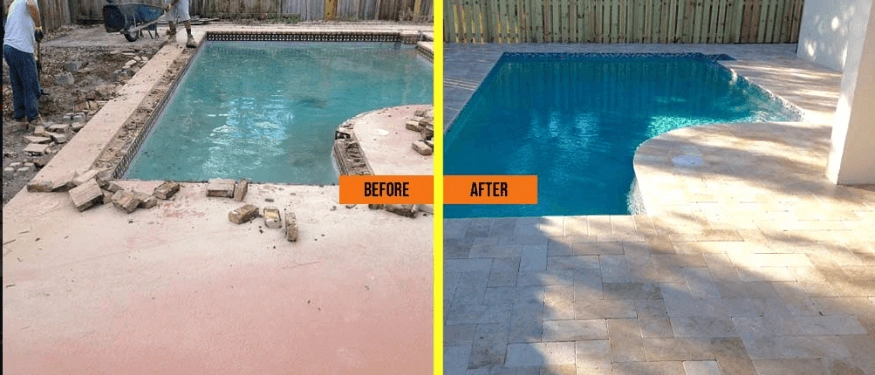
HOW MUCH DOES POOL RESURFACING
COST IN SOUTH FLORIDA?
Learn what pool resurfacing may cost in South Florida, which factors change the price, what a quote should include, and how to compare estimates accurately.
A pool resurfacing project in South Florida can fall anywhere from the mid-four figures to well into five figures. That is a frustratingly broad answer, but it is more honest than pretending every pool can be priced from its length and width alone.
As of October 2026, current published South Florida pricing guides commonly place straightforward residential pool resurfacing around $4,500 to $18,000 or more. Basic plaster generally occupies the lower end, quartz aggregate finishes tend to fall in the middle, and premium pebble or specialty aggregate finishes usually command more.
That range is a planning tool—not a Precision Pavers & Pool Design quote. The actual cost depends on the pool’s interior surface area, finish selection, preparation requirements, existing damage, access, included startup services, and whether tile, coping, decking, or repairs are added to the scope.
The useful question is not simply, “What does resurfacing cost?” It is:
What work, material, and post-installation service does that price actually include?
- 1. The Short Answer
- 2. Why Pool Resurfacing Prices Vary So Much
- 3. Typical Pool Resurfacing Cost Ranges in South Florida
- 4. How Finish Selection Changes the Price
- 5. Pool Size, Shape, and Interior Surface Area
- 6. Surface Preparation and Existing Pool Condition
- 7. What a Pool Resurfacing Quote May Include
- 8. Costs That May Be Outside the Resurfacing Quote
- 9. When Tile, Coping, or Decking Changes the Project Scope
- 10. How to Compare Pool Resurfacing Estimates
- 11. Questions to Ask Before Accepting a Quote
- 12. Budgeting for the Right Scope
- 13. Frequently Asked Questions
The Short Answer
For a typical residential pool in South Florida, homeowners may encounter general resurfacing estimates in these broad October 2026 planning ranges:
- Traditional white plaster or marcite: approximately $4,500–$9,000
- Quartz aggregate finishes: approximately $5,500–$13,000
- Pebble or premium exposed-aggregate finishes: approximately $8,500–$18,000 or more
These ranges reflect a review of currently published South Florida contractor and market guides. They are not a Precision price list, and they should not replace an on-site assessment and written proposal.
Several current local sources illustrate why homeowners see such different numbers. Published South Florida guides report overall resurfacing ranges beginning around $4,500 and extending beyond $15,000, while finish-specific Broward and Miami guides place premium aggregate projects as high as $18,000 or more. The ranges overlap, but the assumed pool size, preparation, material, and included services vary from source to source.
That variation is exactly why the cheapest number on a search-results page tells you very little by itself.
If the project also includes new waterline tile, coping, decking, equipment, structural work, or design changes, it may no longer be a resurfacing-only project. Our guide to pool resurfacing versus pool remodeling explains that distinction in more detail.
Why Pool Resurfacing Prices Vary So Much
Two pools that look similar from the patio can require very different amounts of material and preparation.
A resurfacing price may change because of:
- The pool’s total interior surface area
- Depth changes, steps, benches, spas, ledges, and unusual geometry
- The selected finish product and color
- The condition of the existing finish
- Hollow, loose, or delaminated material
- Previous coatings or layers that affect bonding
- Cracks, leaks, or movement that require evaluation
- Access for workers, equipment, and debris removal
- Water removal and refill arrangements
- New fittings or drain covers
- Startup, brushing, and water-balancing responsibilities
- Tile, coping, deck, or equipment work added to the project
There is another major reason published prices conflict: the word resurfacing does not always describe the same scope.
One estimate might cover basic surface preparation and a standard finish. Another might include more extensive removal, fittings, refill filtration, startup service, or repairs. A third might quietly exclude several of those items.
Comparing only the bottom-line totals can therefore produce a false comparison.
Typical Pool Resurfacing Cost Ranges in South Florida
The following table is intended for early budgeting. It does not establish what Precision will charge for a particular pool.
| Finish category | October 2026 planning range | What commonly changes the price | Often considered by homeowners who want | Important considerations |
|---|---|---|---|---|
| Traditional white plaster or marcite | Approximately $4,500–$9,000 | Pool size, preparation, existing damage, access, and included startup work | A classic appearance and lower initial material cost | Confirm the exact product, preparation method, expected appearance, and maintenance requirements |
| Quartz aggregate | Approximately $5,500–$13,000 | Product line, color, aggregate blend, pool geometry, preparation, and repairs | More color and visual texture than basic white plaster | Products within the quartz category are not interchangeable; compare the named finish and color |
| Pebble or premium exposed aggregate | Approximately $8,500–$18,000+ | Aggregate type, product line, texture, color, surface area, installation requirements, and preparation | A more natural or highly textured finish with a broader design range | Evaluate the exact sample in person and understand that texture and appearance vary by product |
| Specialty or upgraded finish systems | Project-specific | Product availability, material composition, installation method, design details, and pool condition | A particular color, texture, or visual effect | The category name alone is not enough to establish price or performance |
| Resurfacing combined with other renovations | Outside a resurfacing-only comparison | Tile, coping, decking, equipment, structural work, water features, and design changes | A coordinated pool and outdoor-area transformation | Request a clearly separated scope so resurfacing costs are not confused with the broader remodel |
The broad ranges above align with several current South Florida pricing publications, including Superb Pools’ South Florida resurfacing guide, Custom Watershapes’ Broward County cost guide, and MIA Remodeling’s Miami resurfacing page.
Those companies publish their own assumptions and scopes. Precision is not endorsing their prices. We reference them only to show the range currently visible to South Florida homeowners and why an actual written scope matters more than a generic average.
How Finish Selection Changes the Price
The finish is one of the most visible cost variables, but broad labels such as plaster, quartz, or pebble are only starting points.
Within one category, pricing can change because of:
- The manufacturer and product line
- Aggregate composition
- Pigments and color selection
- Texture and exposure method
- Material availability
- Installation requirements
- Pool size and shape
- Preparation needed underneath the new finish
A basic white cementitious finish is generally positioned below upgraded quartz and premium exposed-aggregate options. That does not automatically make the least expensive finish wrong—or the most expensive finish best.
The better choice depends on the homeowner’s budget, desired appearance, texture preference, willingness to maintain water chemistry, and expectations for the finished pool.
Our South Florida pool-finish comparison examines plaster, quartz, pebble, and other finish categories without treating one material as universally superior.
Whenever possible, compare actual samples rather than selecting from a compressed online photograph. Color, aggregate density, texture, sunlight, depth, surrounding materials, and water chemistry can all affect how the completed surface appears.
The National Plasterers Council also explains that cementitious pool finishes can display normal shading, mottling, color variation, and aggregate-density variation. Its pool-interior-finish disclosure is worth reviewing before choosing a finish based entirely on a perfectly uniform sample image.
Pool Size, Shape, and Interior Surface Area
Pool pricing is not based solely on the rectangular footprint visible from above.
The finish covers the floor, walls, slopes, steps, benches, ledges, spa surfaces, and other interior features. A compact pool with substantial depth changes or complex geometry can have more finishable surface area than its basic length and width suggest.
Features that can increase material or labor requirements include:
- Attached spas
- Sun shelves
- Multiple benches
- Wide stair systems
- Raised walls
- Unusual curves
- Deep ends
- Beach entries
- Interior water-feature surfaces
This is why “What does it cost to resurface a 15-by-30 pool?” still cannot produce a dependable quote without more information.
The dimensions help. They simply do not tell the entire story.
Surface Preparation and Existing Pool Condition
A new finish is only one part of the work. The surface beneath it must be suitable for the selected preparation and application system.
Preparation may involve cleaning, removing loose material, addressing hollow or delaminated areas, treating the existing surface, preparing around fittings, and completing other steps required for proper bonding.
Diamond Brite’s published surface-preparation instructions call for identifying conditions that could interfere with bonding, including dirt, algae, loose tile, cracked plaster, hollow spots, delamination, and other unsuitable material. That is a useful reminder that preparation is not a decorative extra. It is part of the installation system.
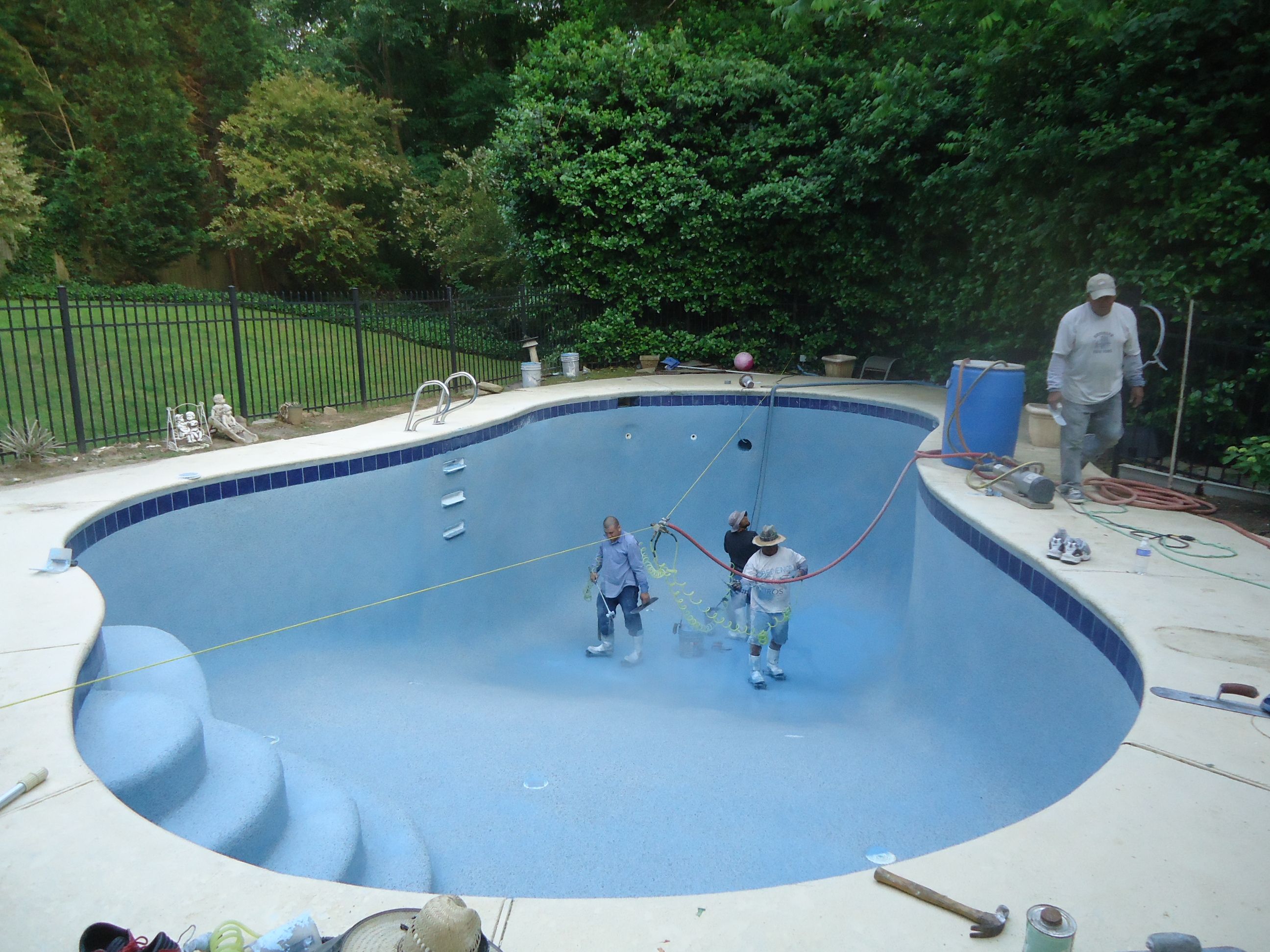
A pool with a stable existing surface may require a different preparation scope from one with widespread hollow areas, multiple failing layers, or damage beneath the visible finish.
Some conditions can only be fully understood after the pool is drained and the surface is examined more closely. A responsible proposal should explain how discoveries outside the original visible scope will be handled and approved.
Visible staining, roughness, discoloration, or fine cracks also do not automatically prove that resurfacing alone is the correct solution. Our guide to signs that a pool may need resurfacing separates common finish symptoms from issues that may require further evaluation first.
What a Pool Resurfacing Quote May Include
Depending on the contractor and written scope, a resurfacing proposal may include some combination of:
- Draining the pool
- Protecting the immediate work area
- Preparing or removing portions of the existing surface
- Repairing specified hollow or deteriorated areas
- Installing the named finish product and color
- Replacing specified fittings
- Installing compliant drain covers where included
- Cleaning after finish application
- Refilling the pool
- Filtering or treating fill water
- Initial startup procedures
- Brushing and water-chemistry service for a stated period
- Debris removal and cleanup
The critical phrase is may include.
Do not assume every contractor includes the same work simply because both proposals say “pool resurfacing.” Ask for the exact finish, preparation, fittings, startup responsibilities, exclusions, and procedures to be written into the scope.
This protects the homeowner and makes it easier to compare estimates fairly.
Costs That May Be Outside the Resurfacing Quote
Items commonly handled separately—or included only when expressly listed—may include:
- Waterline tile replacement
- Coping repair or replacement
- Pool-deck work
- Structural or engineering evaluation
- Crack or movement repairs
- Leak detection
- Plumbing repairs
- Light or electrical work
- Equipment replacement
- Automation upgrades
- Water features
- Extensive finish removal
- Permit or administrative fees when applicable
- Water used to refill the pool
- Ongoing startup visits or chemicals
- Landscape restoration
- Difficult-access charges
This does not mean these items will always cost extra. It means homeowners should never assume they are included.
Even the word startup can mean different things. One proposal may include only an initial chemical treatment. Another may include multiple visits, testing, adjustments, and brushing over a defined period. Another may place those responsibilities on the homeowner or pool-service provider.
The National Plasterers Council recommends an appropriate startup procedure for freshly plastered pools, and Diamond Brite publishes specific initial-fill and water-chemistry guidance. Ask who is responsible for following the selected finish manufacturer’s requirements and for how long.
When Tile, Coping, or Decking Changes the Project Scope
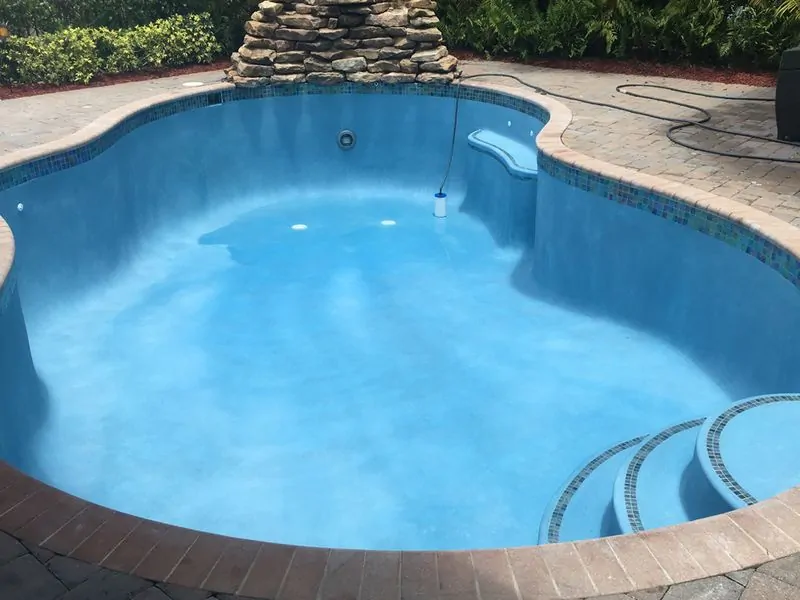
Resurfacing concerns the pool’s interior finish. Waterline tile, coping, and the surrounding deck are connected visually and physically, but they are separate components.
If those components remain serviceable and fit the homeowner’s goals, they may not need to be replaced merely because the pool is being resurfaced.
However, combining the work may make sense when:
- Tile is loose, damaged, dated, or being removed during preparation
- Coping is cracked, unstable, deteriorated, or incompatible with the desired design
- The deck is settling, failing, uncomfortable, or part of a larger outdoor redesign
- The homeowner wants the finish, tile, coping, and deck to coordinate
- Access or sequencing would make future work more disruptive
Once these components enter the scope, the project total should no longer be compared with a resurfacing-only estimate.
Read our guide to replacing pool tile, coping, and decking during resurfacing before deciding whether to keep, repair, replace, or further evaluate each component.
Homeowners planning a more comprehensive transformation can also use our South Florida pool-remodeling guide to define the broader project before requesting estimates.
How to Compare Pool Resurfacing Estimates
A lower estimate is not automatically incomplete, and a higher estimate is not automatically better. The goal is to determine whether the proposals describe equivalent work.
Use a side-by-side checklist instead of comparing only the totals.
| Scope item | Quote A | Quote B | What to confirm |
|---|---|---|---|
| Exact finish product and color | Is the manufacturer, product line, finish, and color named? | ||
| Surface preparation | What preparation or removal method is included? | ||
| Existing damage | Which repairs are included, excluded, or subject to change orders? | ||
| Draining and water disposal | Who handles the water, and are any restrictions or charges identified? | ||
| Refill water | Is the water itself included, excluded, or paid directly by the homeowner? | ||
| Startup and water balancing | Who performs it, what does it include, and for what period? | ||
| Fittings and drain covers | Which specific items will be replaced? | ||
| Waterline tile | Is tile untouched, repaired, or replaced? | ||
| Coping | Is coping protected, repaired, replaced, or excluded? | ||
| Permits or approvals | Who determines what applies and who handles it? | ||
| Cleanup and disposal | What debris removal and site cleanup are included? | ||
| Written exclusions | What is expressly outside the quoted price? |
If one estimate is thousands of dollars lower, the table may reveal a legitimate material difference—or simply several missing scope items.
Do not be afraid to ask a contractor to clarify vague language. “Premium finish,” “standard prep,” and “complete startup” sound reassuring, but each phrase needs a concrete definition.
Questions to Ask Before Accepting a Quote
Before signing a resurfacing proposal, ask:
- What exact finish manufacturer, product, and color are included?
- How was the pool’s interior surface area evaluated?
- What surface-preparation method is included?
- How will hollow, loose, cracked, or delaminated areas be handled?
- What happens if additional damage is found after draining?
- Are fittings and drain covers included?
- Are tile, coping, and decking included, protected, repaired, or excluded?
- Who pays for the refill water?
- Who performs the startup and water balancing?
- How long does the included startup service last?
- What maintenance responsibilities begin immediately after installation?
- Are permits or approvals required for this exact scope, and who handles them?
- What cleanup and debris removal are included?
- Which items could result in a written change order?
- What payment schedule applies?
- What written product or workmanship documentation will be provided?
The answers should make the proposal easier to understand—not create a fresh cloud of fog.
Budgeting for the Right Scope
A practical resurfacing budget should contain three layers:
1. The defined resurfacing scope
This includes the selected finish, measured pool, agreed preparation, fittings, labor, and any clearly stated startup services.
2. Known related work
This could include tile, coping, repairs, equipment, or another component already identified during planning.
3. A contingency for conditions that cannot be confirmed yet
The appropriate contingency depends on the pool’s age, visible condition, previous work, accessibility, and how much can be assessed before draining. It should not be treated as automatic contractor profit. It is simply financial breathing room for legitimate discoveries or homeowner-approved changes.
If the pool’s finish is the only component requiring work, keep the project focused. If several connected components are deteriorated or no longer fit the homeowner’s goals, define the broader scope before collecting proposals.
Precision Pavers & Pool Design can help homeowners review the pool, surrounding materials, and project goals so the estimate reflects the work being considered—not a generic number copied from a website.
Frequently Asked Questions
Q:How much does pool resurfacing cost in South Florida?
Current published South Florida market guides commonly place residential pool resurfacing between approximately $4,500 and $18,000 or more. Traditional plaster generally occupies the lower portion of that range, quartz finishes tend to fall in the middle, and premium pebble or exposed-aggregate finishes usually cost more. Pool size, existing condition, preparation, access, and included services can move the final price outside these ranges.
Q:What is the cheapest type of pool finish?
Traditional white plaster or marcite is generally the lowest-priced major finish category. However, the lowest initial price does not establish the best overall choice. Homeowners should compare the exact product, appearance, texture, maintenance expectations, preparation, and written scope.
Q:Why are two pool-resurfacing estimates so different?
The estimates may assume different finishes, surface areas, preparation methods, repair allowances, fittings, startup services, refill responsibilities, or exclusions. Compare the written scopes line by line before deciding that the prices represent the same project.
Q:Does pool-resurfacing pricing include waterline tile?
Not necessarily. Waterline tile is a separate component and should be identified clearly as included, repaired, replaced, protected, or excluded. Never assume tile work is included solely because the pool is being resurfaced.
Q:Are coping and pool-deck work included with resurfacing?
Usually, coping and decking should be treated as separate scope items unless the proposal expressly includes them. Adding either can turn a resurfacing-only project into a broader pool-remodeling project.
Q:Does the resurfacing price include refilling and startup?
It depends on the proposal. Some estimates include certain refill or startup services, while others exclude the water, chemicals, brushing, testing, or follow-up visits. Confirm each responsibility in writing.
Q:Can a contractor give an accurate pool-resurfacing price from photographs?
Photographs can help begin the conversation, but they cannot reliably reveal every condition, measurement, layer, hollow area, access issue, or repair need. A dependable proposal generally requires more information and an appropriate assessment of the actual pool.
Q:Is the most expensive pool finish always the best?
No. A higher-priced finish may offer a different aggregate, texture, appearance, or product system, but it is not automatically the best fit for every homeowner. The right choice depends on the pool, budget, design goals, texture preference, maintenance expectations, and properly defined installation scope.
Planning to Resurface Your South Florida Pool?
The useful number is the one tied to your actual pool, selected finish, preparation requirements, and clearly defined scope. Precision Pavers & Pool Design can help you review the pool’s condition, compare material options, and determine whether the project should remain focused on resurfacing or include other coordinated updates.